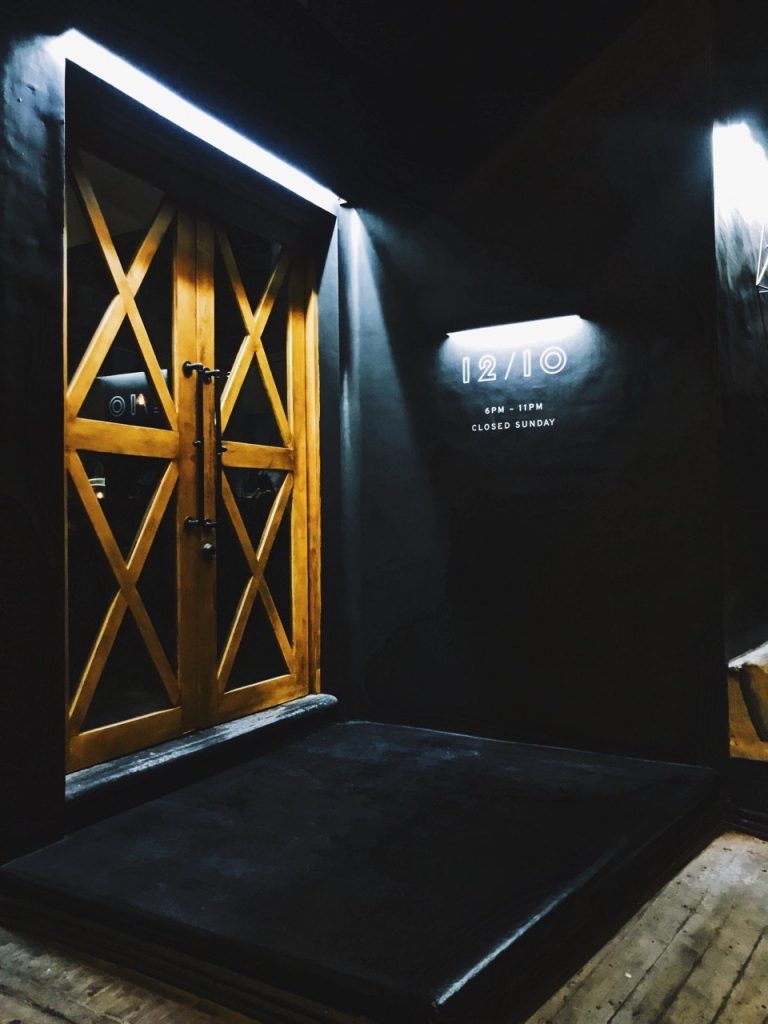
12/10, one of the best-kept secret spots in Makati, is a modern Japanese izakaya. It has a beautiful ambiance that’s quaint and very welcoming.
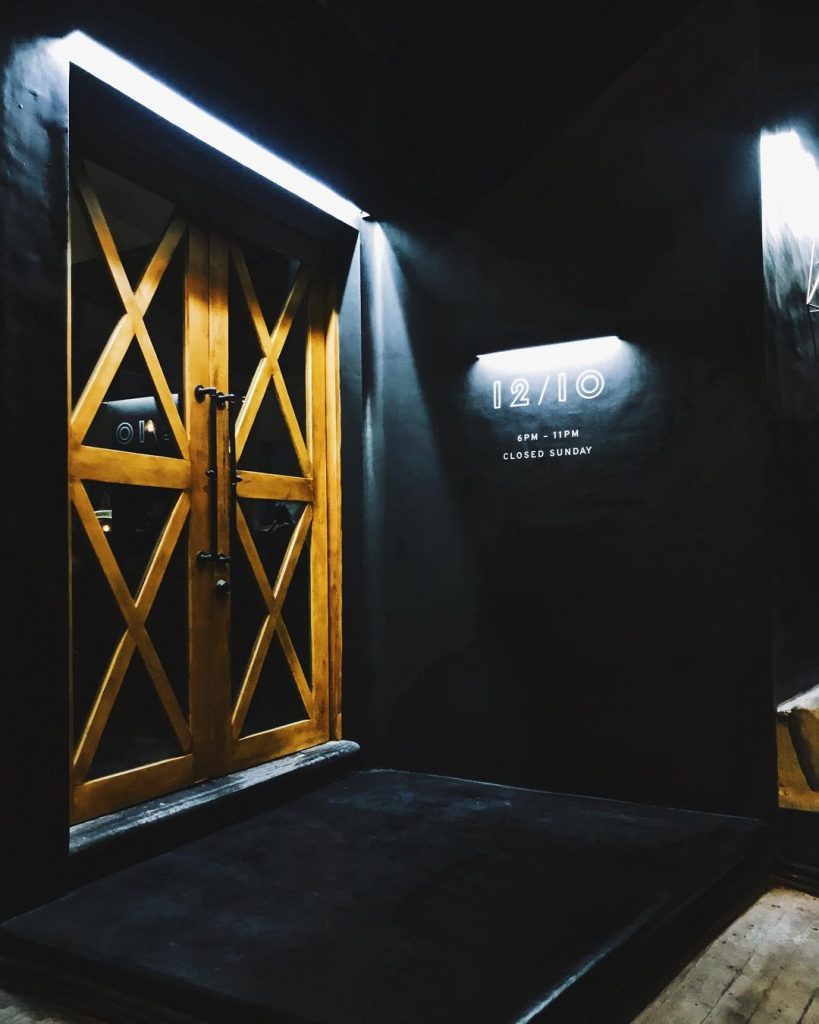
First Visit
Last month, we went there to try their tasting menu, which was designed for two people. It was comprised of a full, 9-course meal. Namely, our menu included; oyster, uni toast, salmon, cauliflower, eggplant, mackerel, Mayura wagyu, onigiri, and capped off with their homemade faux Twix.
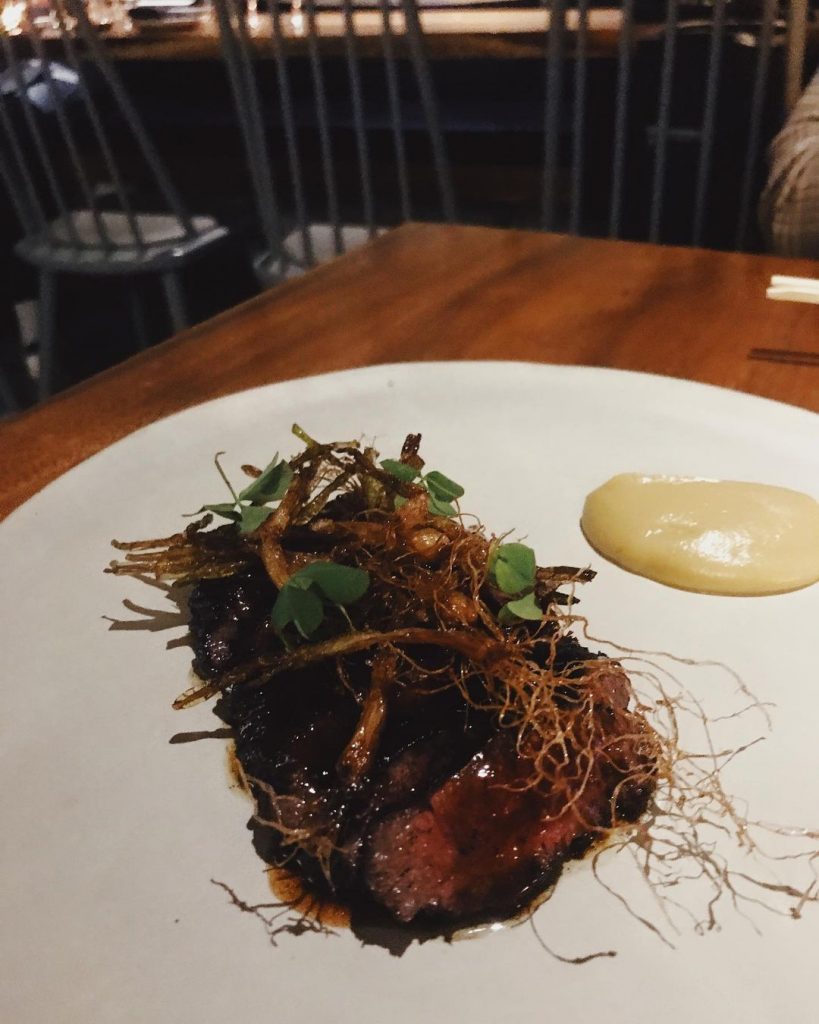
For us, the star of the show was their Mayura Wagyu – it’s a special type of wagyu because, during the cow’s lifetime, it’s fed with chocolate which supposedly makes for an extra soft and tender meat that’s packed with flavor and has a butter-like consistency. We also added a couple of dishes that according to their friendly staff was a must-try like the mushroom salad and their katsu sando. We paired our food with the Crying Lighting, a shaken cocktail with 3 types of rum (Chairman’s reserve, O.F.T.D plantation, and Sailor Jerry) mixed with Kwai Fei lychee, orgeat, and garnished with lime. It’s on the sweet and nutty spectrum and made for a pleasant after-dinner drink.
Second Visit
We recently paid another visit last week. This time, we came in early, but couldn’t get a table since they were fully booked for the night. Instead of turning us away, they offered to seat us at the bar, which turned out to be better than expected because we had a more interactive experience with their welcoming staff.
We got uni toasts (something we had sampled on our last visit) which was quickly turning into a favorite of ours. We wanted to try something new, so we asked the bartender, Louie, what his favorites were. We ended up ordering seaweed rice together with their best selling tori, which we paired with a cocktail called “Sunflower.”
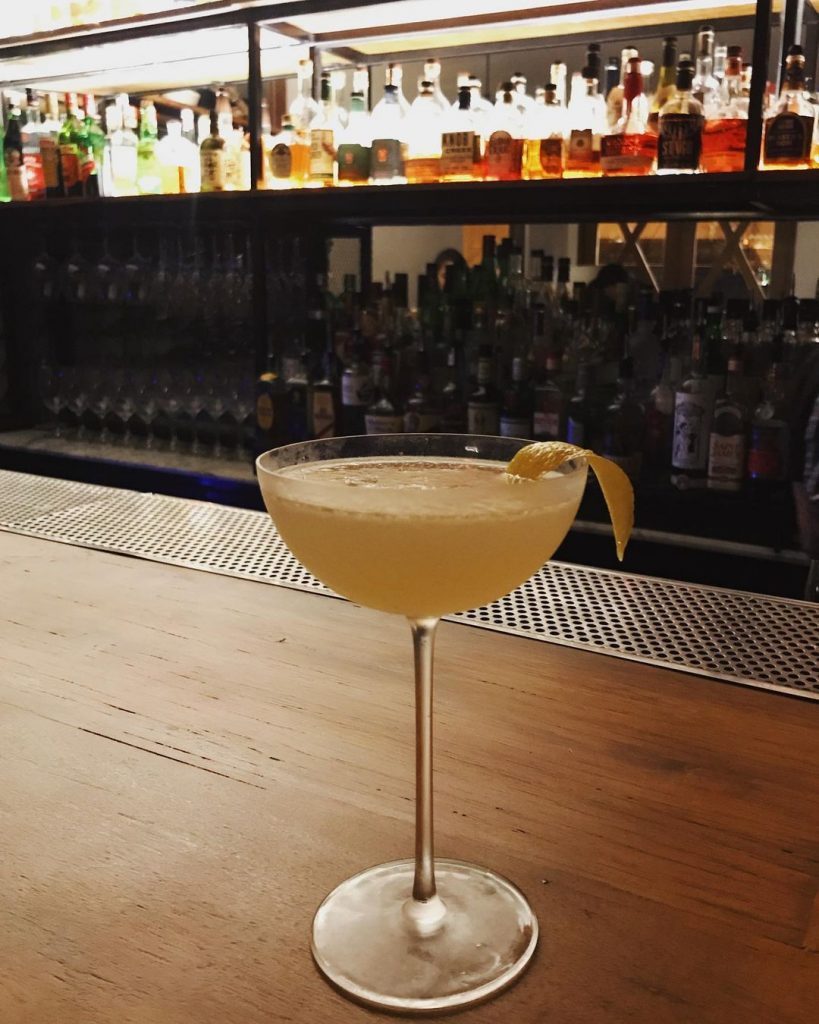
Sunflower features Tanqueray gin, St. Germain, Cointreau, and lemon. The food was decadent and had a lot of umami notes, the Sunflower had bright and floral notes which made for a great palate cleanser in between courses.
If you’re just dropping by for a quick drink or a bite, we do recommend sitting at the bar. You’ll most likely be entertained by their staff, and it’s a good place to have a little chat with them, they’ll be happy to explain what’s in your drink or food so just ask away.
Follow @twelvetenph on Instagram.
Extraction rate. What is it? Well, it’s a technical term, but when understood, can lead to getting the best results from your coffee. And coming to that understanding involves breaking apart how coffee grounds react with water depending on the coffee’s grind size. Having a finer grind size results in more surface area for water to extract flavor from the coffee, but having a grind size that is too fine, might result in over-extraction.
How do we know when our coffee is over or under-extracted? That’s where we use extraction rate. In coffee, the rate of extraction is measured by the percentage of the grounds that get dissolved in the water. It’s basically how much coffee is extracted in the brewer and ends up in your cup or in barista hustle’s words: “Extraction is everything that the water takes from the coffee.”
According to theperfectdailygrind.com, compounds that are extracted into your brew have a direct impact on the flavor and even the aroma of the coffee. Coffee typically contains water-soluble compounds that produce, bitter, acidic, and sweet flavors.
Since coffee compounds are not all extracted at the same rate, you need to find the perfect balance in your brewing time. Usually, fruity and acidic notes are extracted first. This means if your cup is under-extracted, it might become acidic. It’s followed by sweetness and balance, and then finally bitterness.
But let’s get a little bit more technical, how do you compute for extraction rate or extraction yield? Here’s a formula from www.baristainstitute.com: Extraction Yield % = Brewed Coffee (g) x TDS (%) / Dose (g).
Brewed coffee is the amount of liquid coffee that ends up in your cup, TDS is an abbreviation of “Total Dissolved Solids.” You’ll get best results by reading this using a digital meter (pictured.) TDS ranges from organic matter such as calcium and magnesium, which basically contributes to the strength of your coffee, and dose means the amount of ground coffee you put in the brewer.
So if you are brewing with 18g of coffee, and your espresso coffee is at 36g, the extraction yield % of my cup is at 20%. (36 g x 10 % / 18 g = 20 %)
It seems difficult to comprehend but it’s actually easier when you experiment with your coffee to taste the difference that a little more extraction makes. We recommend playing around with your grind size, to get a better gauge of which output you prefer and how you are maximizing your coffee.
Have you ever had a drink that was both warm and cold? The “Naughty or Nice” cocktail designed by Ken Bandivas of William Grant & Sons for his bar takeover at Spirit’s Library features Monkey Shoulder, Giffard Banana du Brasil, lemon, chocolate bitters, white chocolate, and coconut cream foam. At first sip, your taste buds are immediately blown away. White chocolate with coconut cream foam is thick and warm, followed by a gush of cold from a mix of lemon, whiskey, and banana du Brasil syrup.
.
Ken warms the foam by placing it in a nitro canister which is then immersed in a sous-vide set at 110°C. The sous-vide machine is an immersion circulator that keeps the water bath at a consistent temperature. The Naughty or Nice is one of the best drinks we’ve had so far this Christmas season because the sweet and fruity flavors were complemented by the play in contrasting temperatures. It’s an excellent drink for Christmas time in a tropical country. We had to order more than one!
This is DC7. It’s the 7th iteration of our OG Brew Bar’s Custom Coffee Blend dubbed “Daily Coffee.”
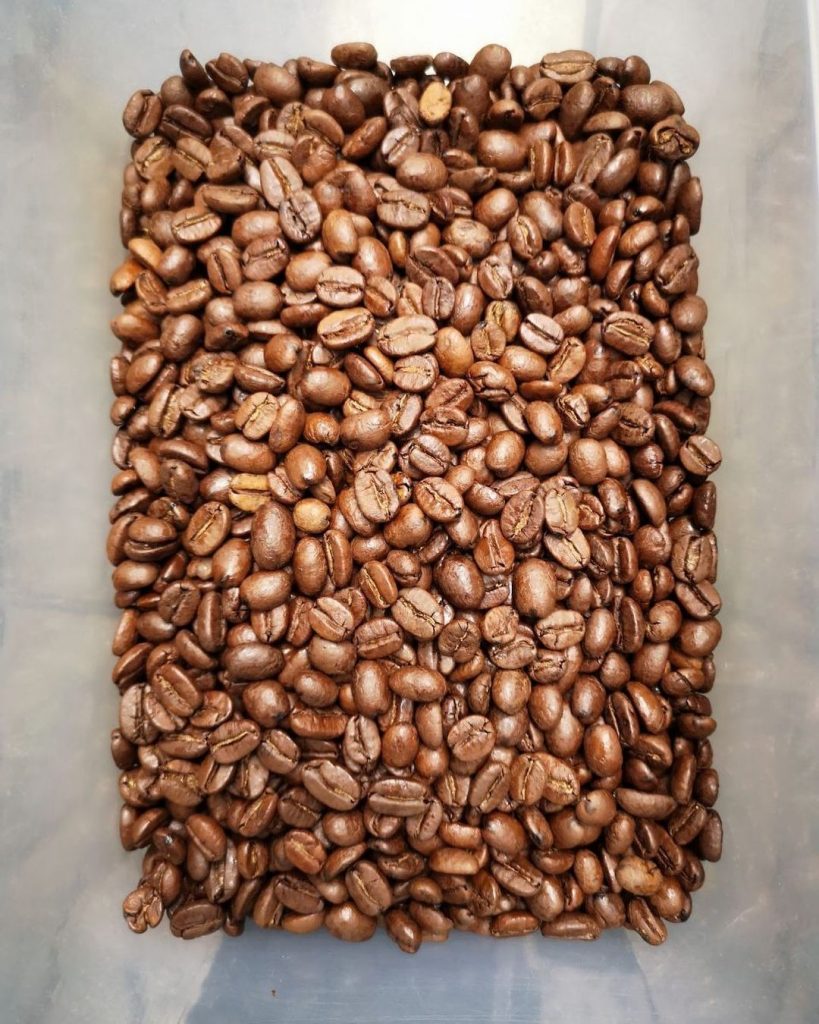
We’re always remixing, growing, and adapting our taste to the changing flavors that the seasons bring. However, DC7 is designed to create a new standard cup that is both flexible and understandable. We all love exciting light-roast coffees, but have found that the general public still want a coffee that provides them with that comforting cup that can be a daily habit. This window is where the DC line of blends live.
Our DC7 is an omni-roast comprised of 30% Guatemala HueHuetenango, which we usually get from the December and January harvest. This is the season when the cherries are more consistent in moisture content and hardness. These beans are washed process, which gives it the beautiful sweetness and fruity flavor notes.
Now add 30% Columbia Supremo, a coffee from Tolima in the Andean region. These are Natural process and give the blend that little bit of spice.
Add last but not least, 40% Mt.Apo, from BACOFA Coffee, we don’t have any specific micro-lot to site for our source, but the beans we get are very consistent, honey processed, and contribute greatly to making the coffee understandable to the local palate.
This blend results in a coffee taste that is sweet and fruity up front, with lots of different chocolate flavour notes blending into nutty tones. The brew is rich with a full body and a smooth acidity with a less bitter finish.
What you see isn’t even as close to what you’ll get with this cocktail. This drink was crafted by Mel Chavez, assistant bar manager of Tippling Club for his guest shift during the Bar Awards tour at The Back Room in Shangri-La at the Fort, Manila.
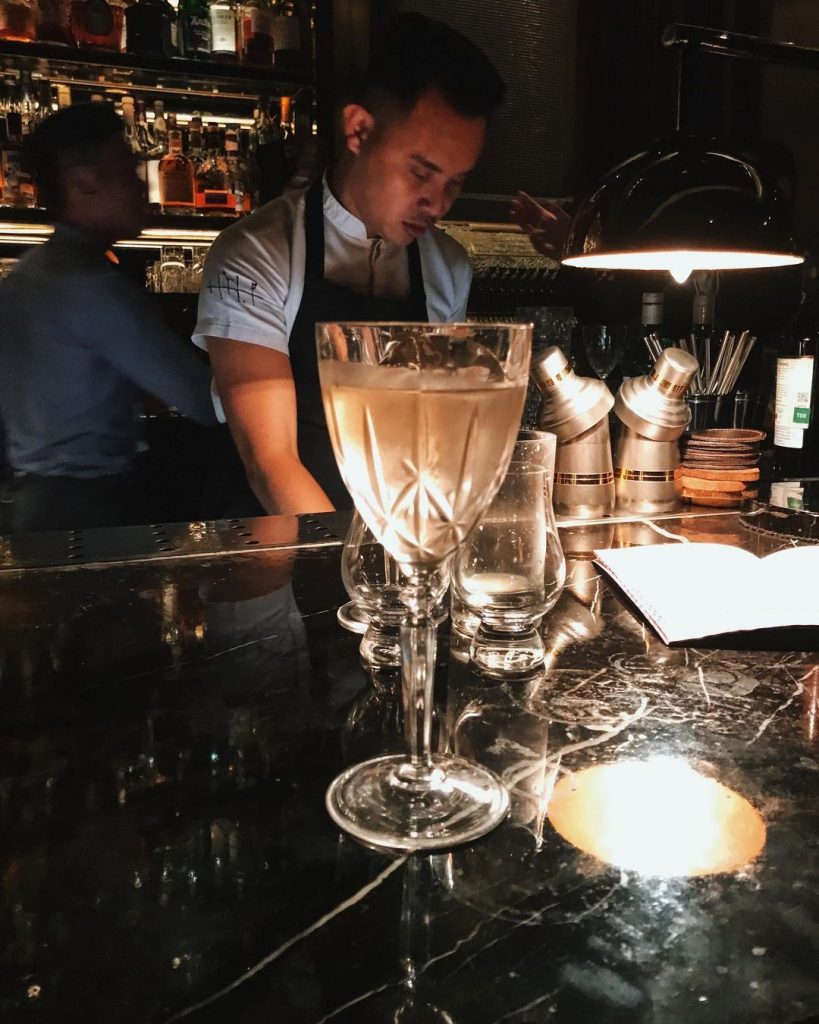
The “Three Emperors” includes Ketel One vodka, aromatised wine, Shiraz, peated whisky plum, raspberry cordial, botanicals, with a dash of lemon and orange peel oils. At first glance, this cocktail appears clear and seems flat. But you’d be surprised to find that it actually has a bodied texture coming from the lemon and orange peel’s oils and botanicals. It’s a very pleasant drink, with a subtle flavor of mixed spices that’s a bit sweet and citrusy which reminds us of red fruits, but the sweetness is not overpowering, it also has a long finish that has an oaky and floral aftertaste.
Catch Mel Chavez during his bar shifts at the Tippling Club in Singapore to experience his take on cocktails. He’s a fun bartender to chat with because he explains every detail of his drinks, down to his inspiration for each cocktail.
Follow @backroomph, @chavezmeljohn, and @tipplingclub on Instagram.
The first time I heard the term “preinfusion,” I simply faked that I knew what it was. And I got away with it. Before I knew it, I was 2 years down the rabbit hole of Specialty Coffee, and didn’t really understand the concept at all. Maybe you’ve found yourself in a similar position? Over the last few weeks, we’ve been talking a lot about using preinfusion in relation to our Decent espresso machine. And it has made a world of difference compared to doing a straight 9 bar espresso shot. So it seemed about time that I dove into the topic to fully understand it.
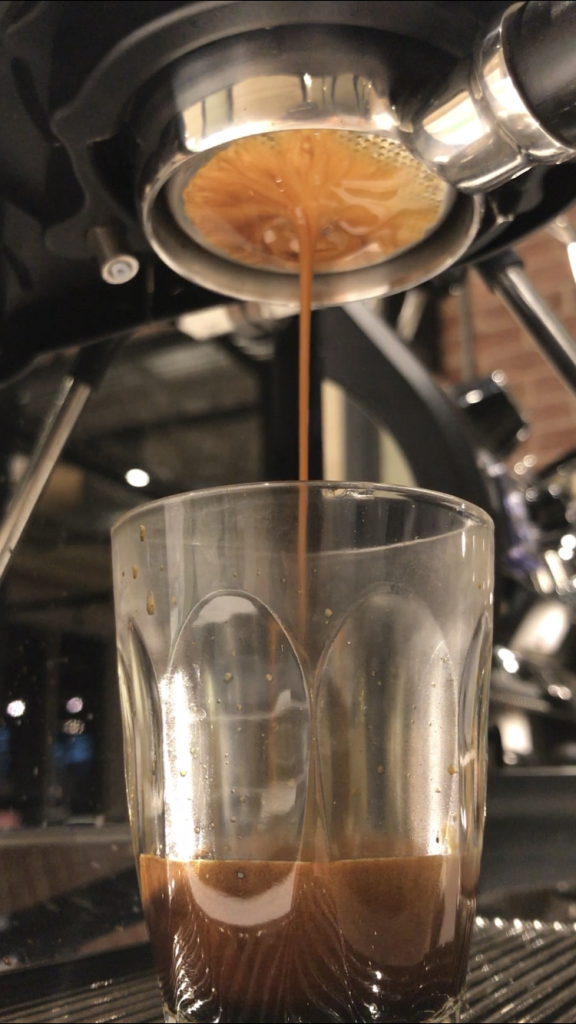
So what is preinfusion? Simply put, it is a method used as a way to saturate coffee grounds before completely pulling a shot of espresso. It involves soaking the puck of coffee with low pressure, low water flow, and low temperature before fully extracting and brewing the coffee puck to create espresso. The general idea is to make a more consistent flow.
Channeling happens because water finds the least path of resistance, so uneven distribution and uneven tamping can create weak points in the coffee puck which water will find and over-extract those channels. Grounds near the channels will over-extract, while grounds not in the channels will under extract. We do not want this.
Preinfusion creates an evenly saturated coffee bed to encourage water to flow evenly throughout the entire puck, which makes for a well-extracted coffee. Experimenting with variable preinfusion can lead to “nice results.”
We found that pre-infusing coffee can come in varied forms, from soft infusion to hard infusion, even to variable pressures, and different lengths of time according to Compound Coffee Co.
We also found that there is more use for preinfusion that just saturating coffee. Clive Coffee explains that methods that use preinfusion such as “flow profiling” or “pressure profiling” can be seen as a step forward in utilizing preinfusion.
This research has led me to appreciate the concept of preinfusion better. There’s really more to it than just waiting a few seconds longer than usual for the espresso shot to come out.
I’m excited to explore more topics that cover the science behind specialty coffee. Maybe you have a coffee term you’d like us to expound on? Post your ideas in the comments.
Looking for a reason to take a trip to the historic street of Escolta? The Den may be a perfect excuse. The cafe recently renamed their place as The Den Coffee & Contemporary Culture in an effort to develop a hub for local artists and coffee enthusiasts. It’s actually quite hard to find the place if you don’t know what you’re looking for because it’s embedded deep inside HUB: Make Lab, a marketplace for creative startups on the ground floor of the iconic First United Building.
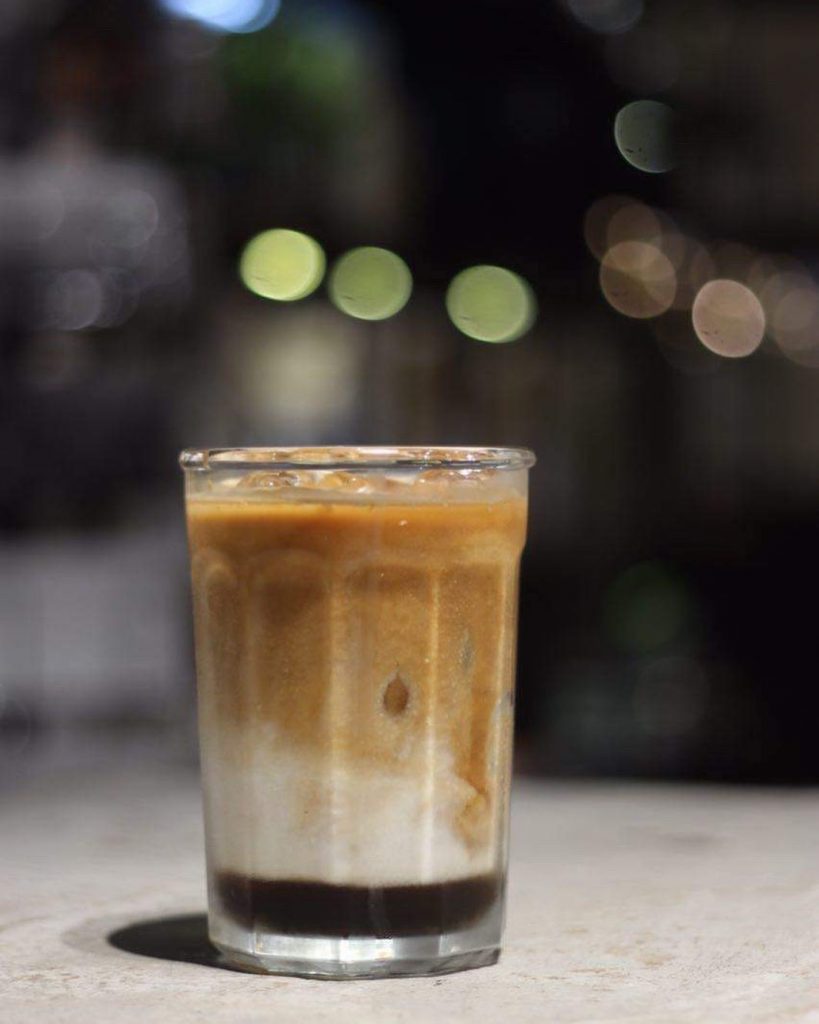
The Den has a special beverage, “The Berg’s,” which is named after the old department store that occupied their current space in the 30’s. The beverage is a mix of espresso, coconut milk blend, and muscovado syrup. It’s served hot, but we recommend getting the chilled “iced berg” variant for a more refreshing coconut flavor.
We commend The Den for holding the fort, giving homage to what was once the shopping district of Manila. They’ve done a great job keeping the history of Escolta alive and making it relevant today by forming their own retail and shopping community.
Follow @thedenmanila on Instagram.
Why is this latte worth 290.00 pesos?
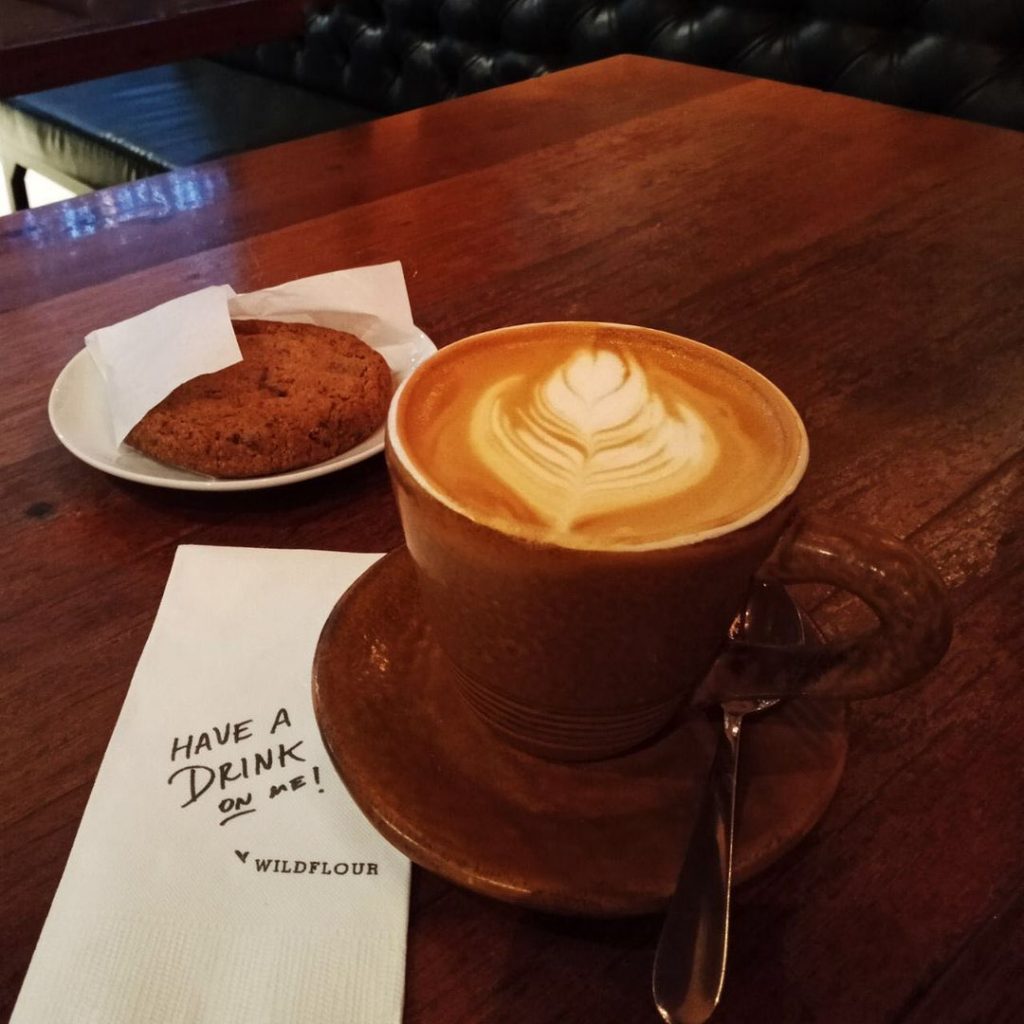
The Vanilla Almond Latte is prepared with “homemade almond milk”. This is music to the ears of anyone who is lactose sensitive & caffeine-dependent.
Our server at Wildflour Cafe + Bakery, in Greenhills, explained that their almond milk is made in house and following the conventional process by soaking roasted almonds overnight with a bit of salt, processed through a high powered blender, and then the liquid is strained to separate it from the almond pulp.
Though almond milk is naturally unsweetened and almonds are low in sugar. The latte was sweet! Maybe even a bit too sweet. A vanilla flavor added to the creamy taste to made the drink seem “milky.” Perhaps this is driving the sweetness?
Their food is created by world-renowned chefs like Margarita Lorenzana-Manzke, who’s a James Beard pastry chef finalist. And most of their founders come from Le Cordon Bleu culinary schools in London and in California. Their espresso blend is called “Black Velvet” and is composed of beans from Brazil, Indonesia, and Colombia, roasted in the United States by specialty coffee OG roster, Verve Coffee.
We ordered the latte hot, as recommended, along with a chocolate chip cookie. It is common knowledge by now, that a trip to Wildflour isn’t complete unless you select something from their display of assorted housemade pastries. However, on our next visit we will most likely order their cookies with a black coffee because the sweetness of the vanilla almond latte didn’t pair well with the chocolate chip cookie and all the sweetness we got left the taste buds overwhelmed.
But Wildflour is much more than a place for coffee and cookies. It is also one of the best places you can go out for a cocktail with your kids in town. Wildflour is always a safe bet to bring the little ones along because you can order a Negroni side by side with an ice cream sundae or pizza. One for them, one for you. A cocktail of theirs worth noting is the aptly named Corpse Reviver #2. It features Bombay Sapphire gin, lemon juice, Cocchi Americano, and triple sec. It’s a classic done just right—not too strong and not too mild.
Where else can you find great cocktails, amazing food, and child-friendly surroundings? If you’ve got kids, then you know just how amazing that is. But even without them, Wildflour is a good move.
Notes for next visit: it’s Vanilla Almond Latte and a low sweetness, buttery pastry.
Follow @wildflourmanila on Instagram.
We’re capping off your Top Five Favorites, which are based on your favorite posts. We’ve based our list of the most popular, talked about coffee shops and bars for this month’s posts. Some of these are coincidentally part of our own personal favorites, so we’re definitely excited to share this with you! Without further adieu, here are your five most popular posts from the month of November:
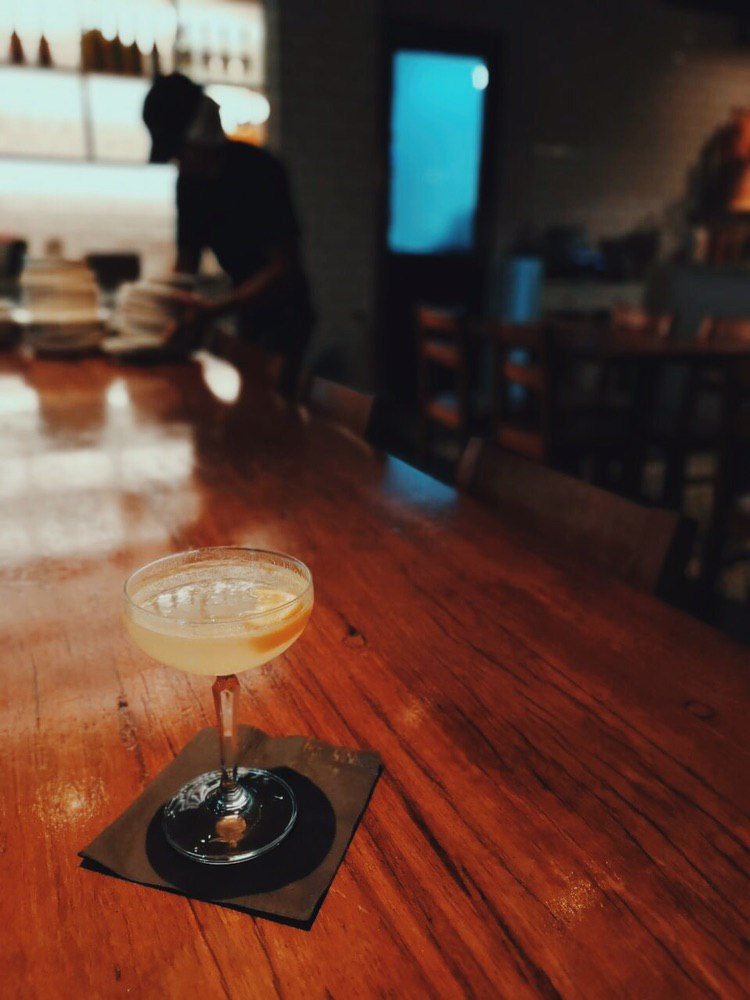
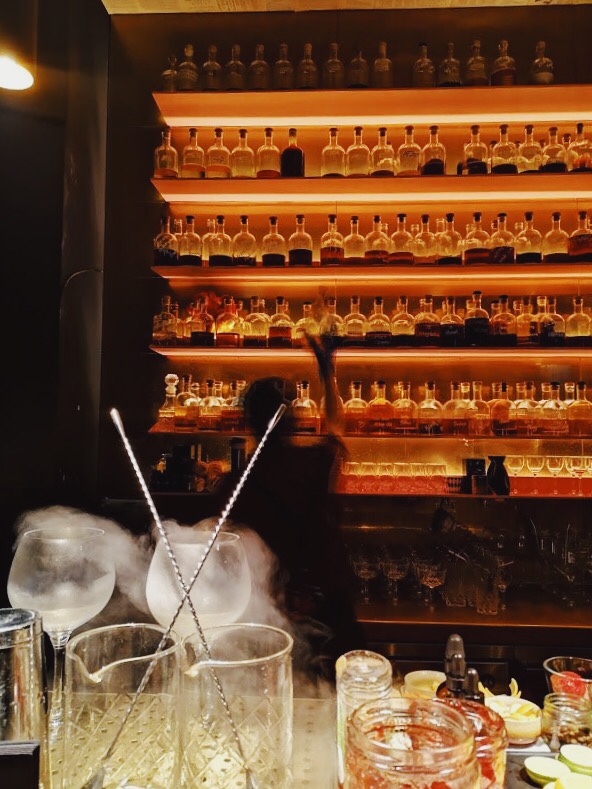
It’s a bit tricky to find this place because it’s a speakeasy bar hidden behind a discreet velvet curtain inside a hotel. But once you get in The Other Room located in Marriott Tang Plaza Hotel, Singapore, the search instantly feels worth it because you’re treated to a welcome drink served in a dropper bottle with a glass of water on the side, like a true VIP.
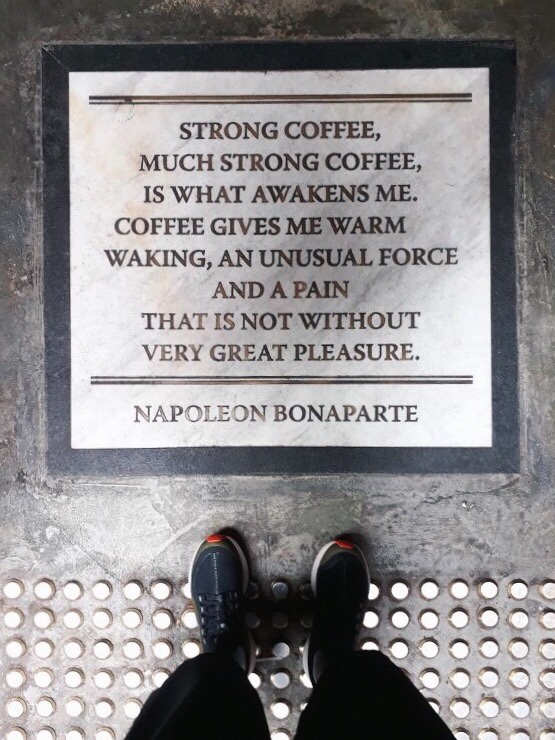
A coffee crawl around Hong Kong would seem incomplete without a trip to at least one of The Coffee Academics’ twelve stores in that country. We visited the one along Yiu Wa street in Causeway Bay and it may have been one of the classiest coffee shops we’ve ever seen. A brass plate embedded on the entrance floor has words from Napoleon Bonaparte engraved on it, inviting guests to go ahead and have their much-deserved coffee break.
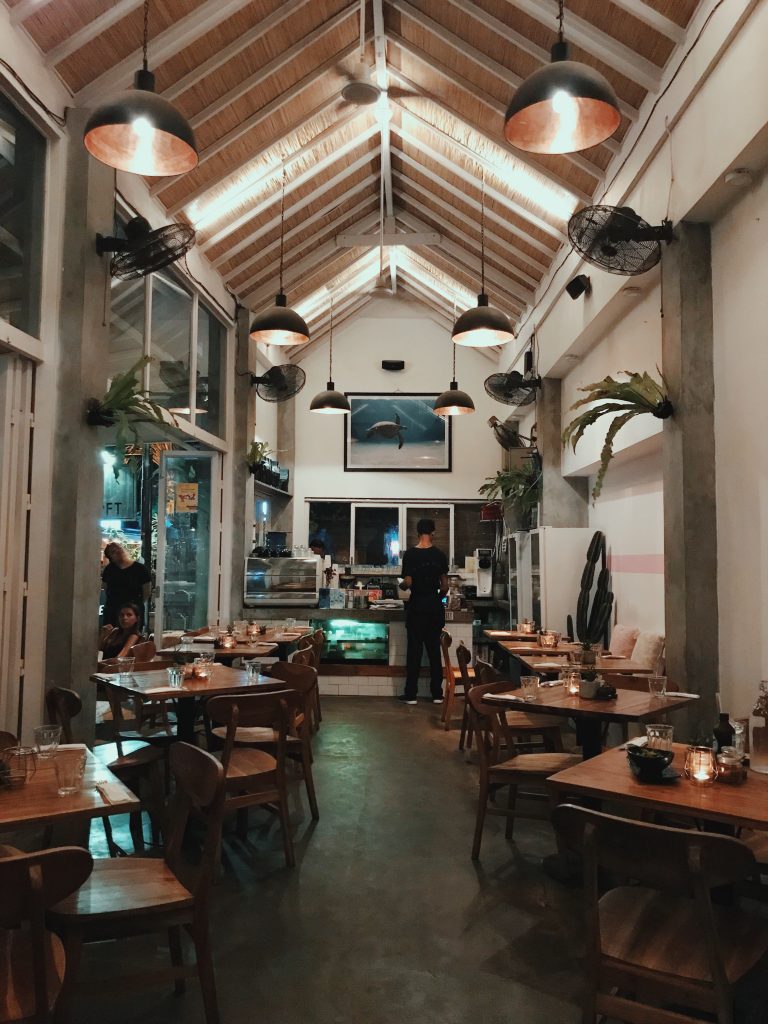
After walking up and down the busy streets around Canggu, pit stop at The Loft. Their space design is wide open, with almost half of their tables al fresco and there are no walls to separate the interior sections from the outside areas. This results in an effortless flow that allows the cafe’s vibe to radiate out from its core all the way to the street. It creates a very inviting atmosphere that we ourselves were drawn into.
One of the best modern izakaya spots in Manila is in a place you probably won’t just happen upon. So let us give you a couple of reasons to make the trip over to the tiny Guijo Street in Makati to find 12/10. They’re renowned for their unique and modern play on Japanese fusion dishes and their tasting menu is considered one of the best in Manila.
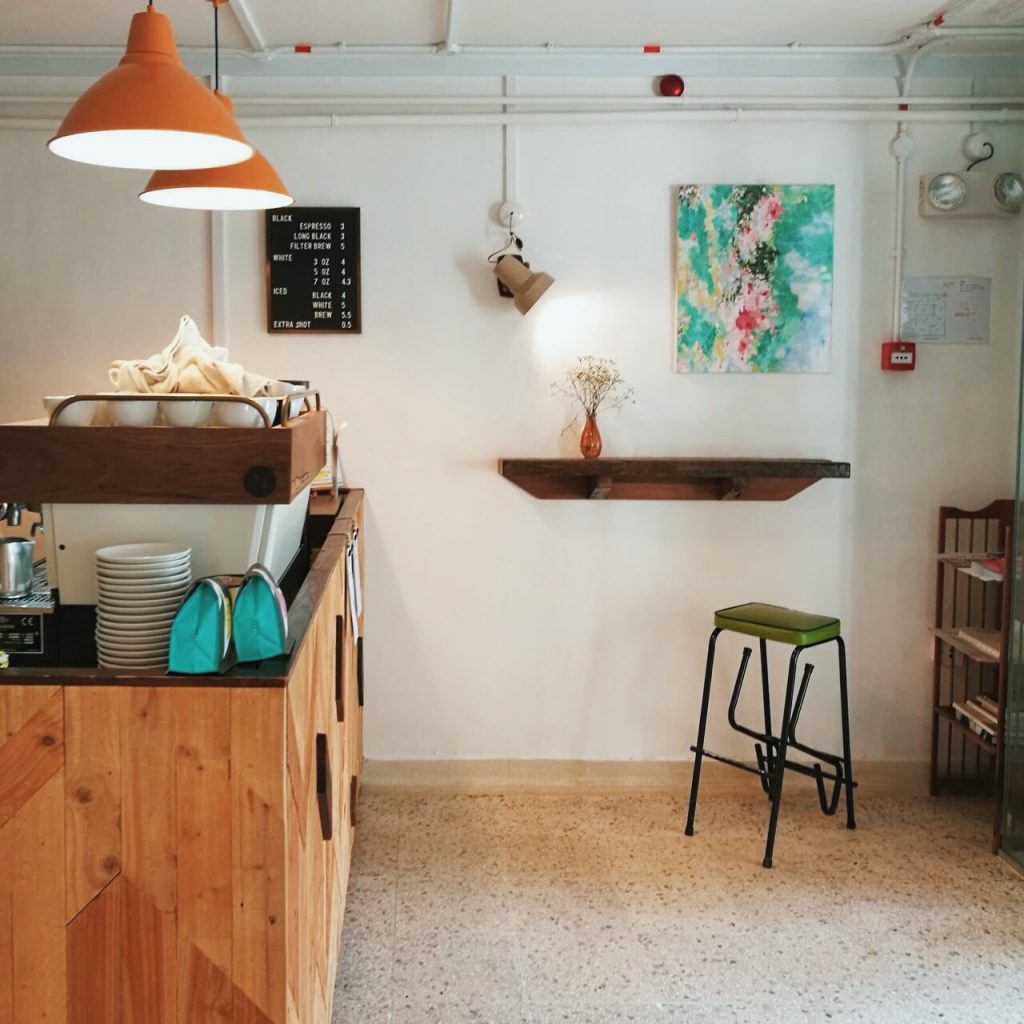
Nylon is situated in between Housing Development buildings facing a quaint pocket courtyard with a few benches and big flowering trees. When in bloom, they flower in bright hues of peach and orange. It’s such a beautiful sight. When you step inside, you are greeted by an attractive wooden coffee bar and you will almost instantly notice that there are no seats except for a couple of chairs that match the colors of the flowers outside.