For a spirit whose defining characteristic comes from a single berry, gin has proven remarkably difficult to define.
Juniper may be mandatory, but beyond that, gin has become one of the most creative categories in the modern drinks world. Distillers experiment with local botanicals, regional ingredients, and techniques that allow each bottle to tell a different story. In many ways, gin’s greatest ingredient is not juniper at all. It is curiosity.
That spirit of innovation is one reason World Gin Day has grown from a small gathering of enthusiasts into a global celebration observed by bars, distilleries, and spirits lovers around the world. What began in the United Kingdom has evolved into an occasion that highlights how far gin has traveled, both geographically and culturally.
Nowhere is that evolution more evident than in the Philippines.
The country has become the world’s largest gin market, reflecting a longstanding appreciation for the spirit and an increasingly sophisticated interest in quality, craftsmanship, and new drinking experiences. At the same time, the global gin category continues to expand, driven by consumer demand for premium, craft, and differentiated products. Worldwide consumption reached approximately 107 million nine-liter cases in 2024, roughly 25 percent higher than pre-pandemic levels in 2019.
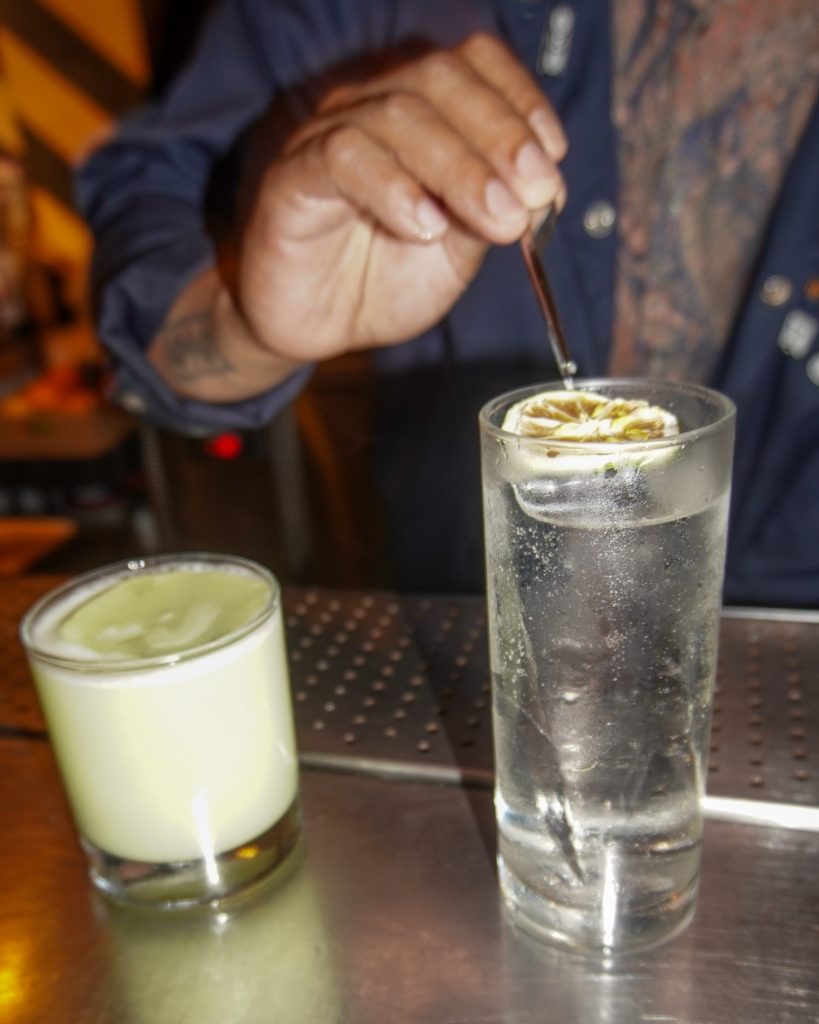
Against this backdrop, the British Chamber of Commerce Philippines is bringing together Philippine and British gin producers for its annual World Gin Day celebration at Dusit Thani Manila. Organized in partnership with 1834 Premium Distilled Gin and Archangel Reserve Premium Dry Gin, the event serves as a showcase of the diversity that defines contemporary gin culture.
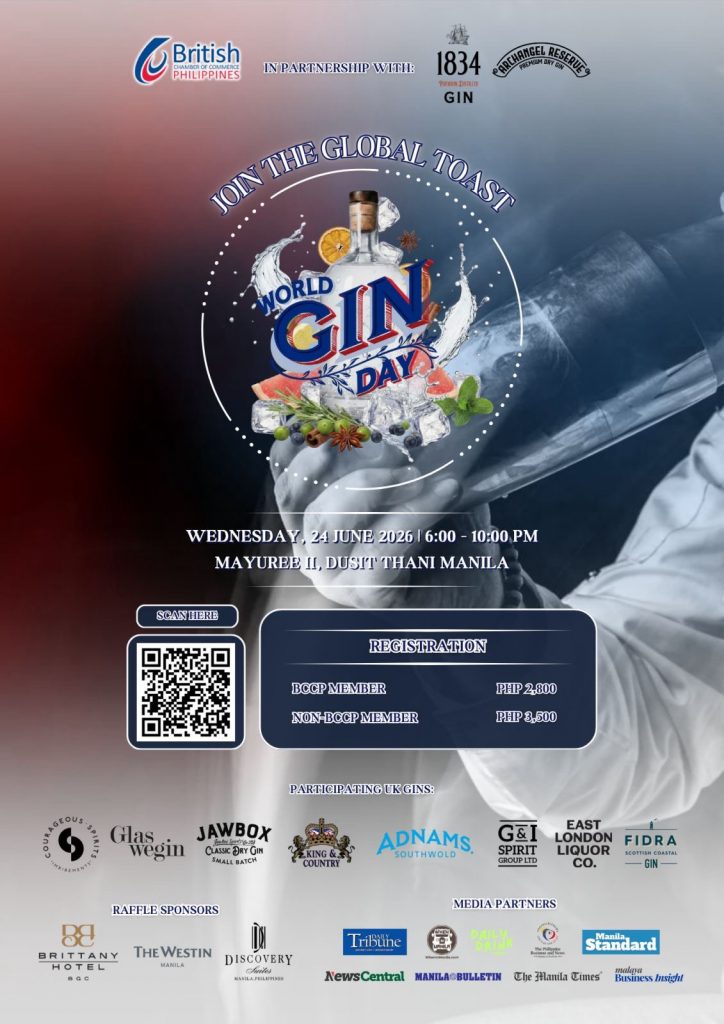
Participating British brands include Glaswegin, Jawbox Gin, King & Country, Adnams Southwold, G&I Spirit Group, East London Liquor Co., and Fidra Gin. Together with their Philippine counterparts, they represent a category that continues to push beyond traditional boundaries through distinctive botanical blends, regional influences, and premium expressions.
As trade and cultural exchange continue to deepen between the Philippines and the United Kingdom, food and beverage products often become the first point of connection. A bottle of gin can introduce consumers to a region, a set of ingredients, or a distiller’s philosophy. It can also open conversations about agriculture, manufacturing, tourism, and trade.
The United Kingdom remains one of the world’s leading gin producers and exporters. Recent industry research citing HMRC data showed UK gin exports growing by 14 percent in 2025, followed by a further 2 percent increase through March 2026. Emerging markets such as the Philippines, China, and India are expected to play an increasingly important role in that growth.
Yet the significance of gatherings like World Gin Day extends beyond the contents of a glass.
World Gin Day ultimately celebrates more than a category of spirits. It celebrates the exchange of ideas. Every botanical tells a story of place. Every distillery reflects a community. Every pour offers an opportunity to discover something new.
For a spirit once associated with tradition, gin has become a symbol of reinvention. That may be the most fitting reason to raise a glass.